
what i'm reading: they called us enemy, a graphic memoir by george takei
an accessible, powerful history, bringing both truth and hope

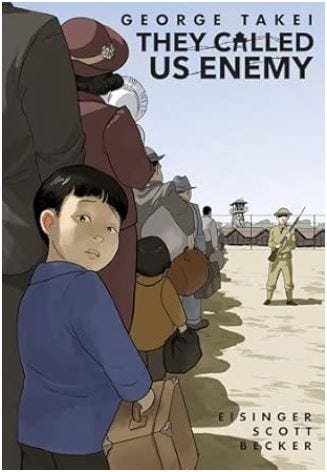
Recently two graphic memoirs were published that are follow-ups to earlier notable memoirs: George Takei’s Rhymes with Takei and Alison Bechdel’s Spent. I hadn’t yet read their original memoirs, Takei’s They Called Us Enemy or Fun Home, Bechdel’s famous graphic from 2006. (This is very typical for me. The same author’s name keeps appearing on my list, so I backtrack.) I plan to read all four.
They Called Us Enemy, George Takei’s first graphic memoir, accomplishes something rare and beautiful. It recounts history in an accessible voice, with both unflinching honesty and a simple gentleness. It is just what you might expect from George Takei, whose very public activism is full-strength, and also warm and loving.
Takei narrates the story through his own memories, and situates those in the political events of the era. The story, told with great compassion, isn’t sugar-coated or diluted. It is simple truth-telling through the gift of survival and the keen hindsight of adult political awareness. The relevance for our present times is blindingly obvious.
Rounded up
Takei was 4 years old when his family — dad, mom, 2-year old brother, and infant sister — was given a few minutes to gather what they could carry, then forced onto a train, and transported to a concentration camp. George became one of the 120,000 Japanese Americans who were rounded up and incarcerated from 1942 to 1946. (Canadians of Japanese descent experienced the same.)
After a terrifying train ride — to where and to what, no one knew — the military transport arrived at the Santa Ana Racetrack. The families were to live in stables, still ripe with the stench of manure. They lived in stables for months.
After that, everyone was loaded onto another train, this time bound for another region of the country. They were deposited in a camp, where they would live in barracks, use latrines, and eat in a “mess hall,” surrounded by barbed wire fencing and patrolled by armed guards.
Takei tells us about daily life in the camp, and shares memories of how his family and the whole community coped. His mother managed to hold on to her sewing machine, and she made curtains out of military-issue burlap sacks. His father played Santa Claus as they celebrated Christmas behind barbed wire.
Loyalty and resistance
Among the many humiliations and injustices that these Americans endured was the demand that they sign a loyalty oath. After the bombing of Pearl Harbor, Japanese Americans were excluded from military service; those already in the armed forces were barred from combat. But here’s the thing about war: fresh cannon fodder is always needed. The US was running out of soldiers.
So the government decided Japanese Americans could enlist in the military after all — as long as they answered “yes” to two questions.
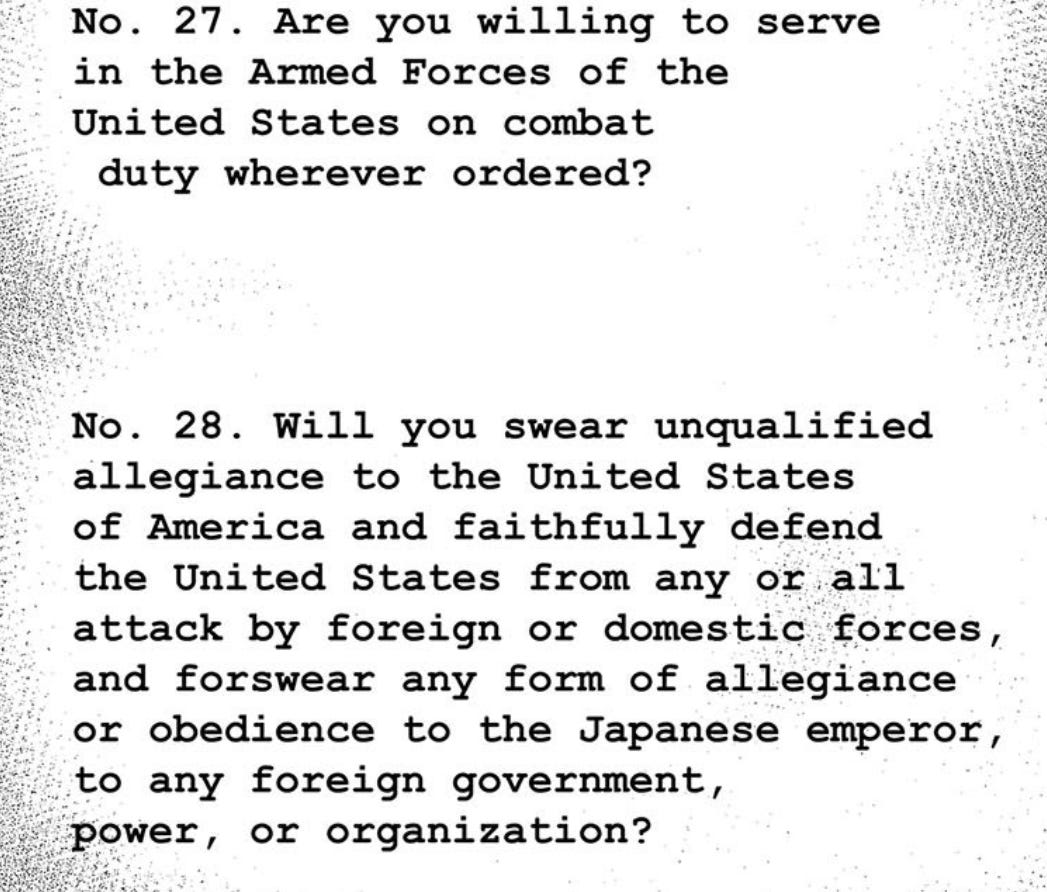
Everyone was outraged. Some, wanting the opportunity to prove their loyalty, swallowed their feelings and said “ys”. Many, Takei’s parents among them, answered “no”, earning the “dubious label” (as he calls it) of no-nos.
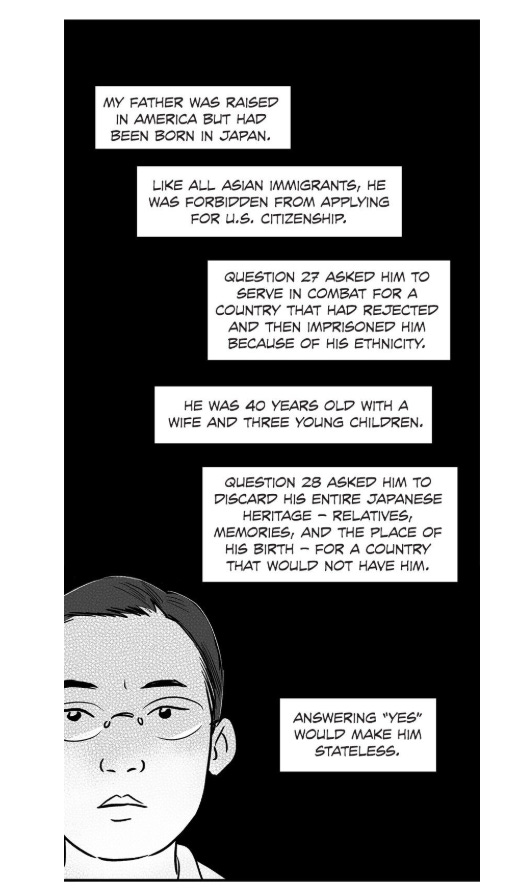
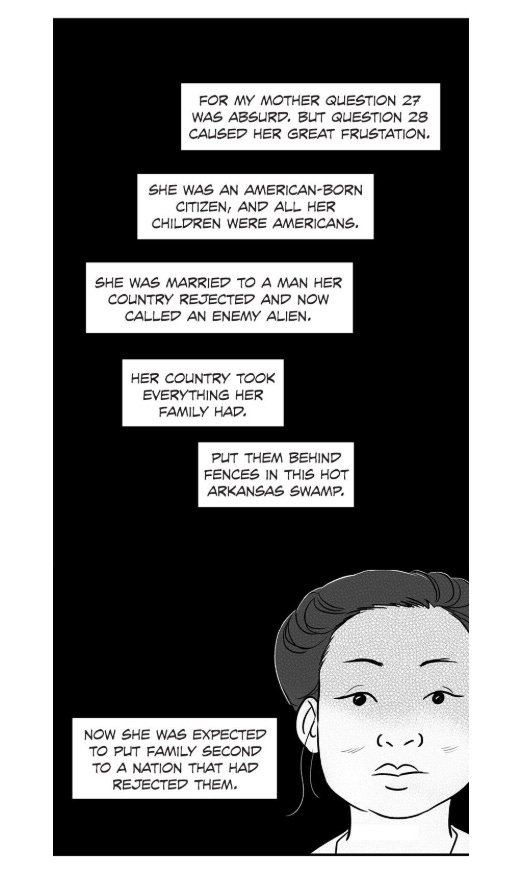
Then, an outcome they did not expect: based on their responses, the US government moved to “repatriate” — that is, to deport — the no-no Americans to Japan.
How to respond to the government’s orders — to acquiese or to resist, or how to draw the line between the two — was, naturally, a painful and contentious issue. Takei honours all the choices the community made.
Many Japanese Americans served with distinction in World War II, then were (of course) denied recognition. This was corrected in part by President Harry S. Truman — you know, the one who gave the orders that obliterated Hiroshima and Nagasaki — in 1946, and then further by President Bill Clinton more than 50 years later. Takei tells that story with love and respect. But he also illuminates and honours those who chose a a different loyalty: loyalty of conscience. For me, this is where They Called Us Enemies excels. Throughout, Takei honours acts of resistance.
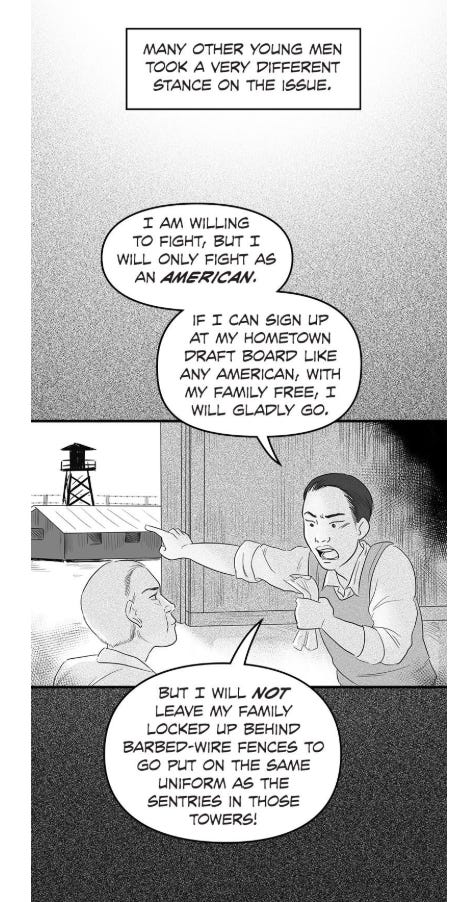
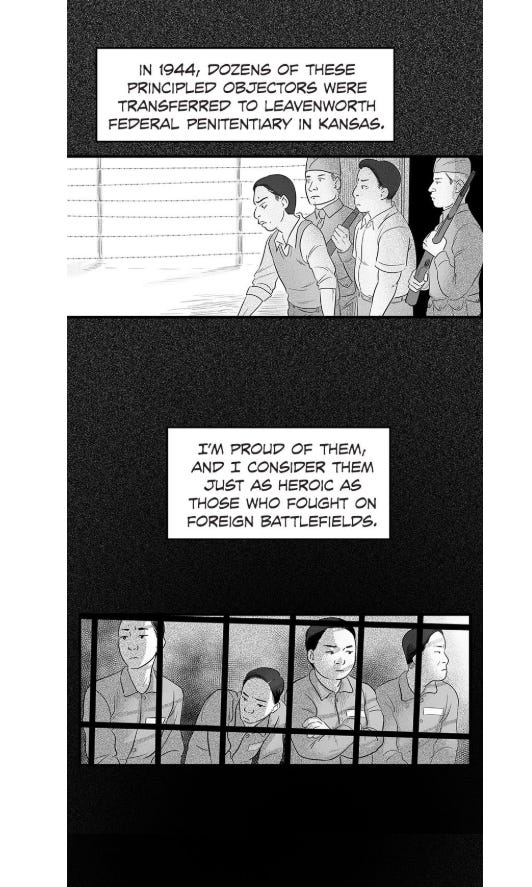
Like all survival stories, They Called Us Enemy is a tribute to human courage and resourcefulness, and also to cooperation, as people depended on each other to get through the experience with their families and their dignity intact. It is also a testament to the resistance that was always present, in ways both large and small.
Family
The book is also a love letter and a tribute to Takei’s parents, especially to his father, whose strength, intelligence, compassion, and determination made him an impressive community leader. Takei also pays tribute to two people, not Japanese, who contributed heroically to their cause. Herbert Nicholson, a Quaker, visited the camps every month, bringing books, magazines, and personal effects to incarcerated families. Wayne Collins, a lawyer, worked tirelessly to have the American citizenship of “no-nos” reinstated and to prevent them from being deported. Takei’s mother was among those, saved only days before she was due to be forcibly separated from her family.
Reparations? Not really.
There is a widespread belief in Canada that the Japanese Canadian experience was even worse than what happened in the US. In Canada, they say, everyone lost their homes, properties, and businesses permanently, while Japanese Americans received restitution. This is simply not true, or at least a huge exaggeration. Homes and businesses were never returned. Frozen and seized bank accounts were never restored. The US government did provide some reparations: less than 10% of what was seized — $38 million against $400 million.
When the Takei family was finally released in 1946, they had no money, no place to live, and no means of support. They were forced to live in a flophouse, one room with no running water, queueing up in the morning to use a filthy bathroom, on a street lined with homeless people (then known as a “skid row”). This was a traumatic experience for George and his siblings.
They Called Us Enemy highlights the Japanese American community’s efforts to tell this story, to honour the survivors, to recognize the Japanese American veterans, and to campaign for an official apology. Through this, the reader learns how Takei discovered acting, eventually being cast in his most famous and groundbreaking role.
Patriotism is always required
The book is laced through with patriotism, practically a requirement in any work that is critical of the US government, or examines a shameful part of American history. Truth-tellers are expected to perform patriotism, by claiming that their ability to openly criticize the government is testament to the great American democracy. When I was a child, the right to criticize and protest would be held up in contrast to the culture of the Soviet Union; today it’s Iran or Afghanistan.
Given the real history of the United States, and given everything going on right now, this rings of farce. But I can’t speak for George Takei. I have to take him at his word. Takei insists that American democracy is the best and highest form of government. He also shows that is only true if people get involved. If they resist.
Its a great book